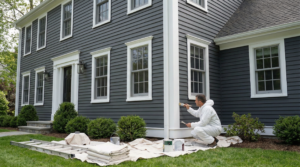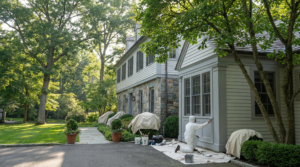
Weston’s wooded setting creates long shade cycles that keep surfaces damp long after rain and morning dew. That’s why the safest painting “season” is really a weather window: dry surfaces, stable temperatures, and overnight lows that stay within product specs. This guide explains what to watch, when risk spikes, and how pros sequence elevations to protect curing in Connecticut conditions.
The most overlooked factor: dew after sunset
Connecticut days can look warm enough to paint, then temperatures drop fast and dew forms as soon as the sun goes down. If the coating hasn’t formed a stable film, moisture can interfere with early curing and lead to defects or shorter life. Use overnight lows and dew risk as primary scheduling inputs—not as afterthoughts.
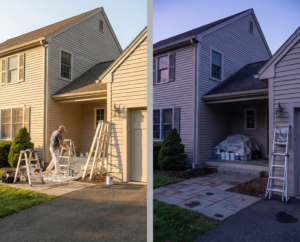
Day-of go/no-go checklist
- No rain expected for 24–48 hours
- Surfaces fully dry (no morning dew on siding/trim)
- Overnight lows within product limits for two nights
- Avoid sustained high humidity when possible
Weston shade patterns change drying time by elevation
On wooded lots, north-facing and shaded elevations can stay damp while sun-facing walls dry quickly. A good plan treats your home as multiple micro-zones, not one uniform surface. That reduces mildew risk and prevents “painted-too-soon” adhesion problems on the shade side.
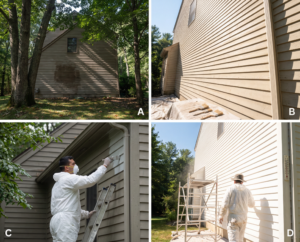
Simple elevation sequencing model
- Start after dew clears on shaded elevations
- Shift away from sun-baked walls during peak heat
- Finish as surface temperatures normalize later in the day
Connecticut windows that typically work best
These windows are a practical planning view for Weston homeowners. Your project still depends on weekly forecasts, your home’s exposure, and the product’s technical data. Use this table to avoid the highest-risk stretches.
Seasonal window table
| Period | Usually works best for | Watch-outs |
| Late spring | Early project starts | Cool nights, rainy runs, pollen film |
| Early summer | Steadier warmth | Humidity spikes, pop-up storms |
| Mid-summer | Long daylight | Flash-drying on hot sun walls |
| Early fall | Often the steadiest | Cooler nights creep in |
| Late fall | Small scopes only | Dew, shorter days, cold nights |
| Winter | Avoid full exteriors | Cure failure risk, wet surfaces |
What “too hot” looks like (even on mild days)
Surface temperature can exceed air temperature—especially on dark colors in direct sun. When a wall is hot, coatings can skin over too fast, reducing leveling and bonding. The fix is scheduling and sequencing: work the shade side first, then return to sun sides once temperatures are more forgiving.
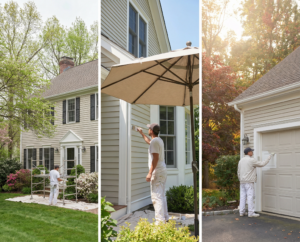
Two practical safeguards
- Measure/feel surface heat before rolling or spraying
- Plan color and wall order to reduce midday heat exposure
Timing and lifespan are the same conversation
Many “paint didn’t last” complaints trace back to damp surfaces, cold nights, or rushed cure windows. Treat timing as part of the durability system along with prep and primer strategy.
Link to lifespan article
Exterior Paint Lifespan in Weston CT
Link to cost article
FAQs
Is early spring a bad idea in Weston?
Not always, but shade and cold nights shrink safe windows.
Is fall safer than summer?
Often—early fall can be steadier, but nights cool quickly.
What’s the most common scheduling mistake?
Choosing dates by month instead of surface dryness and overnight lows.
How many dry days do we need?
Plan for multiple stable days so coatings can cure properly.
Why does shade make timing harder?
Shade slows drying and raises moisture risk at the surface.
Build Your Weston Schedule Around Safe Cure Windows
Juniors Pro Care House Painters schedules exterior work using dry-surface checks, overnight lows, and elevation sequencing—so curing isn’t compromised on Weston’s shade-heavy properties. Request a written estimate with a realistic schedule window.