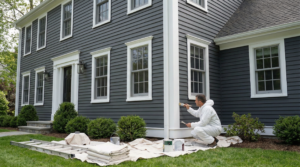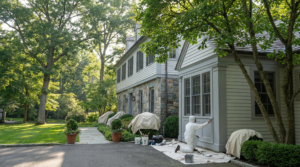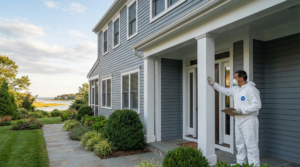
In Norwalk, timing exterior painting correctly means accounting for moisture from the coast, overnight temperature drops, and shaded elevations that dry slowly. Warm afternoons alone aren’t enough—paint needs stable conditions to cure. This guide explains how professionals choose weather windows that reduce failure risk, how seasonal patterns affect Norwalk homes differently than inland areas, and how timing connects directly to how long your paint will last.
Why humidity and dew control the schedule here
Norwalk’s proximity to Long Island Sound raises average humidity and increases dew formation, especially overnight. If paint is applied to a surface that isn’t fully dry—or if temperatures drop quickly—coatings can trap moisture during early curing. That stress often shows up months later as peeling or uneven weathering. Safe scheduling prioritizes dry surfaces and overnight lows that stay within product requirements.
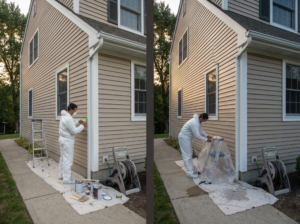
Day-of checks that matter most
-
Confirm dry surfaces on shaded sides
-
Review dew risk for evening hours
-
Verify overnight lows for two nights
-
Keep buffer days for coastal weather shifts
Seasonal planning guidance for Norwalk homeowners
Norwalk shares Connecticut’s seasons but experiences slightly higher humidity and coastal influence. Use the table below to plan, then confirm with short-term forecasts.
Seasonal window table
|
Period |
Usually best for |
Main risks |
|
Late spring |
Main repaints begin |
Rain clusters, pollen film |
|
Early summer |
Steady progress |
Humidity spikes |
|
Mid-summer |
Long daylight |
Storms, hot surfaces |
|
Early fall |
Often the safest |
Nights cool quickly |
|
Late fall |
Small scopes |
Dew and shorter days |
|
Winter |
Avoid full exteriors |
Cure failure risk |
How coastal exposure changes elevation sequencing
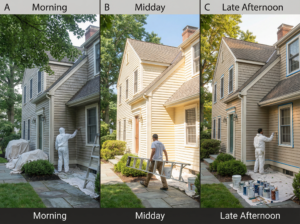
Homes closer to the water or with limited airflow may dry unevenly. Professionals adjust elevation order to avoid painting damp surfaces, especially on north-facing or shaded walls.
Simple sequencing model
-
Wait longer on shaded elevations
-
Avoid sun-baked walls at peak heat
-
Pause if humidity rises late in day
FAQs
Is summer always best in Norwalk?
Not always—humidity and storms can shorten safe windows.
Does coastal air reduce paint life?
It can if prep and timing aren’t adjusted.
How many dry days are needed?
Enough for application and curing through stable nights.
Why does timing affect durability so much?
Moisture during curing weakens adhesion.
What’s the most common scheduling mistake?
Rushing to paint before surfaces are fully dry.
Plan your Norwalk exterior around safe weather windows.
A clean exterior finish depends on timing as much as materials. We plan washing, dry times, patching, priming, and topcoats around realistic Norwalk weather windows—so the system cures properly, bonds tight, and stays sharp through the season.