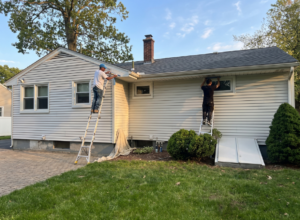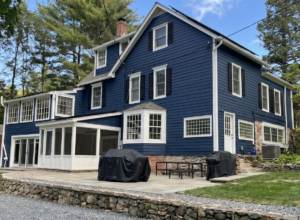
In New Canaan, paint longevity is judged at two distances: from the street and from the front walk. A finish can look “fine” from far away while edges, joints, and shaded elevations begin to fail early—especially if the previous job skipped stabilization or rushed cure conditions. The realistic lifespan depends on surface type (trim vs siding), exposure (sun vs long shade), and how well failure points were corrected before paint went back on. This guide gives surface-by-surface timelines, a quick diagnosis table to separate normal aging from avoidable failure, and a durability checklist you can use before you repaint.
The baseline range—and what it assumes
Exterior paint life is a range, not a promise. The ranges below assume a stable system: failing layers are removed, transitions are feathered, joints are sealed where water enters, primers are chosen for the substrate, and work is scheduled in safe cure windows. When any one of these is missing, the cycle compresses—often first on trim edges and caulk seams.
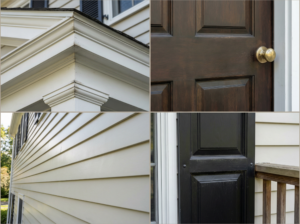
Surface-by-surface lifespan table
| Surface | Typical range | Why it changes |
| Trim, fascia, corner boards | 4–8 years | Edges + seams + seasonal movement |
| Doors and entry elements | 3–6 years | Handling, sun, impact |
| Siding on a sound substrate | 6–12 years | Film build + exposure |
| Railings / shutters | 3–7 years | Contact points + UV |
Why failure shows up sooner on New Canaan details
New Canaan exteriors often include high-contrast detail work: crisp trim lines, refined corners, and clean transitions that make small defects obvious. That’s why early failure here is often “seen” sooner—even if the underlying issue is technical: moisture at a seam, weak layers under a new coat, or an elevation that stayed damp when paint was applied.
Three failure accelerators we see most
- Joint movement: cracks at seams invite water behind the film
- Long shade exposure: dampness increases mildew pressure and slows drying
- Old layers under new coats: weak layers keep failing unless stabilized
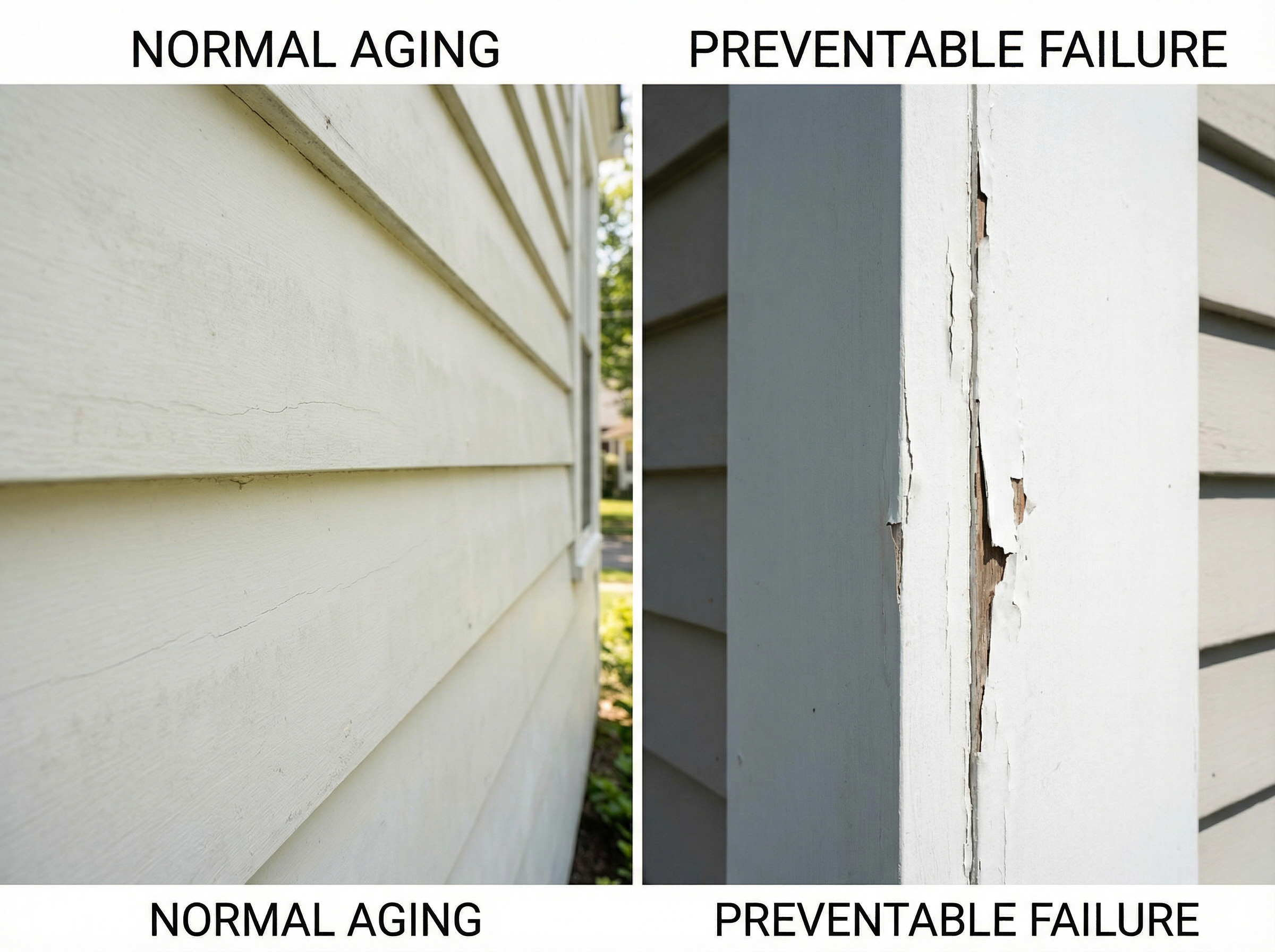
Normal aging vs preventable failure
Use this table to decide whether you’re seeing ordinary weathering or a system problem that needs correction before repainting.
Symptom table
| Symptom | Usually indicates | Best next step |
| Even fading, mild chalking | Normal weathering | Plan repaint cycle |
| Hairline cracks at seams | Aging caulk + movement | Re-seal + spot prep |
| Blistering | Moisture/heat trapped | Dry-out + correct prep |
| Peeling in sheets | Adhesion failure | Diagnose before repaint |
| Repeat mildew zones | Persistent damp shade | Clean + adjust system |
The durability checklist that adds years
A longer repaint cycle comes from addressing failure points, not just upgrading paint. The checklist below is what separates a “freshen-up” from a durable system—especially in Connecticut seasons.
What should be written into the scope
- Remove and stabilize failing layers; feather transitions
- Repair water-entry points and seal targeted seams
- Specify primer locations and purpose (bonding vs stain control)
- Plan elevation sequencing for shade/sun exposure
- Protect curing with stable nights and dry surfaces
Extend lifespan without repainting the whole house
Many New Canaan homes don’t need a full repaint the moment the first defect appears. Targeted maintenance—especially on trim corners and shaded elevations—can prevent small issues from turning into labor-heavy prep later.
Five maintenance moves that buy time
- Gentle washing to remove film and mildew triggers
- Touch up exposed substrate before water penetrates
- Re-caulk failing seams at trim transitions
- Control splash zones with gutters/drainage
- Address repeat shade-zone staining early
FAQs
Is it normal for trim to age faster than siding?
Yes—trim has more edges and seams, where water and movement concentrate.
Can premium paint alone guarantee 10+ years?
No. Prep and cure windows usually dominate longevity.
What does peeling within a couple seasons suggest?
Often a moisture/adhesion issue rather than normal aging.
Do shaded sides reduce lifespan?
They can, because surfaces stay damp longer and mildew pressure increases.
What’s the fastest upgrade for the next repaint?
A written prep scope plus exposure-aware priming and safe scheduling.
See the Exterior Painting Process Built for CT Weather
If you’re still comparing options, start with the process. Our exterior system is built around prep quality, protection, and safe cure windows—so you can judge workmanship before price. Explore our New Canaan exterior service page and see what’s included, step by step.