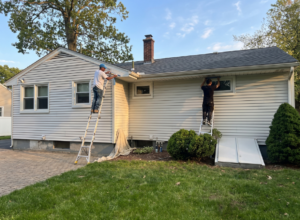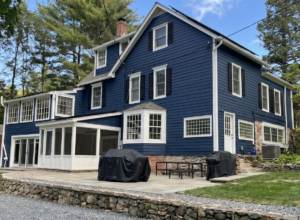
In Wilton, exterior paint life isn’t a single number—it’s a range driven by exposure (sun vs shade), moisture, freeze–thaw cycling, and prep quality. Most reputable guidance puts typical exterior repaint cycles around 5–10 years, but trim, doors, and shaded elevations can fail sooner if moisture or adhesion issues are ignored. Use this guide to estimate realistic lifespan by surface and prevent early peeling.
The realistic range for Connecticut exteriors
Across mainstream homeowner guidance, exterior paint commonly needs refreshing about every 5–10 years depending on sun, moisture, and surface condition. In towns like Wilton, homeowners often see shorter cycles on detailed trim and high-stress edges (where joints move and water hits first), while broader siding surfaces can last longer when prep is thorough and the job is scheduled in stable weather windows.
What changes the range the most
-
Surface type (trim vs siding)
-
Exposure (full sun vs deep shade)
-
Moisture control (staining, mildew, chronic dampness)
-
Prep depth (scrape/sand/prime vs “paint over”)
Lifespan by surface
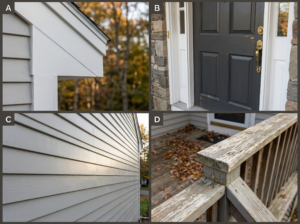
Homeowners usually notice failure on the most detailed, most touched, and most weather-exposed surfaces first. Use the table below to set expectations and to judge whether your current failure is “normal aging” or a sign the previous system wasn’t built for CT conditions.
Typical repaint timelines by surface
|
Surface |
Common lifespan range |
Why it fails first |
|
Wood trim / fascia |
4–8 years |
Edges + joints + water exposure |
|
Doors / high-touch areas |
3–6 years |
Handling + sun + impact |
|
Siding (well-prepped) |
6–12 years |
Exposure + film thickness |
|
Shutters / railings |
3–7 years |
UV + movement + contact |
These ranges assume professional prep and correct weather windows. If paint is peeling in sheets, blistering, or failing within 1–3 years, that’s typically not “normal aging”—it’s an adhesion/moisture problem that needs diagnosis before repainting.
Wilton exposures that shorten paint life
Wilton’s mixed sun/shade patterns—often from wooded lots—can keep north-facing or shaded elevations damp longer, increasing mildew risk and slowing cure conditions. Connecticut’s seasonal swings also stress caulk lines and joints, especially where water sits or trim edges weren’t stabilized. A plan that treats every elevation the same can look fine at first, then fail unevenly within a few seasons.
The 5 early-failure triggers to watch
-
Persistent shade + slow drying after rain
-
Cracked or failing caulk lines at joints
-
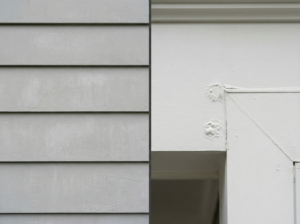
Chalky residue (oxidation) on older coatings
-
Repeated mildew staining in the same zones
-
Peeling at edges where sanding/priming was skipped
Prep and weather are the true lifespan drivers
Premium paint helps, but the biggest longevity gains come from adhesion work and scheduling. Fine Homebuilding’s long-lasting paint guidance emphasizes proper conditions and thorough prep as core drivers of durability. Sherwin-Williams also warns that applying when temperatures won’t stay in the recommended range can allow moisture into an uncured film, leading to staining and adhesion problems. Translation for Wilton: don’t buy “fast”—buy “stable.”
The durability checklist
-
Scrape/sand/feather weak layers (don’t paint over failure)
-
Repair and seal joints where water wins first
-
Prime strategically (substrate- and exposure-aware)
-
Paint inside stable windows (avoid damp surfaces + cold nights)
A simple inspection table: normal wear vs red flags
This table helps homeowners decide whether they can plan normally or need a deeper diagnosis before repainting.
Symptoms and what they usually mean
|
Symptom |
Often means |
Next step |
|
Even fading, minor chalk |
Normal weathering |
Plan repaint cycle |
|
Hairline cracking at joints |
Movement + aging caulk |
Re-seal + spot prep |
|
Peeling in sheets |
Adhesion failure |
Identify cause + stabilize |
|
Blistering |
Moisture/heat trapped |
Dry-out + prep correction |
|
Repeating mildew zones |
Persistent damp shade |
Clean + dry + primer strategy |
How to extend lifespan without repainting everything
Most Wilton homeowners don’t need a full repaint the moment the first defect appears. Targeted maintenance can buy time—especially on trim edges and shaded elevations. Mainstream homeowner guidance recommends proactive maintenance rather than waiting for peeling, because peeling forces labor-heavy prep later.
5 maintenance moves that add years
-
Wash lightly to remove film, pollen, and mildew triggers
-
Touch up exposed wood or primer before water penetrates
-
Re-caulk failing joints on trim transitions
-
Keep gutters/downspouts controlling splash zones
-
Address shade-zone mildew early (before it becomes recurring)
FAQs
Is 5–10 years normal in Connecticut?
Yes—many guides cite 5–10 years depending on exposure and maintenance.
Why does trim fail before siding?
Trim has more edges and joints, and water hits those transitions first.
Can a premium paint guarantee 10–15 years?
Not by itself. Prep depth and stable weather windows matter more.
What does “peeling in sheets” indicate?
Usually adhesion failure—repainting without fixing the cause leads to repeat failure.
What’s the fastest way to improve lifespan on the next job?
Demand a written prep scope and schedule around dew point and overnight lows.
Get a Wilton Exterior Plan Built for Longevity
Juniors Pro Care House Painters builds Wilton exterior projects around adhesion prep, exposure-aware priming, and stable CT cure windows—so you’re not repainting sooner than you should. Request a written estimate with a scope you can compare. Contact us.