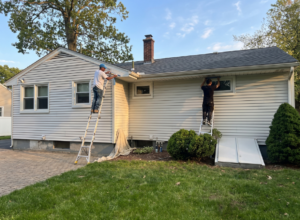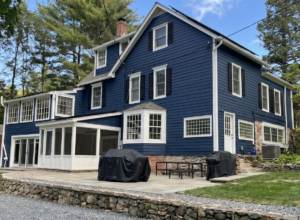
In Wilton, the “best season” isn’t a calendar month—it’s a stable weather window that protects adhesion and curing. Connecticut swings from cold nights to humid days, and paint failure often starts when surfaces are damp or temperatures drop too fast after application. Use this guide to choose safer windows, avoid high-risk weeks, and plan a schedule that supports long-lasting exterior results.
The rule that matters most: stay above dew point
If the surface is at or near the dew point, moisture can form even when the forecast looks “dry.” That invisible film weakens early bonding and can shorten paint life. Sherwin-Williams’ application guidance emphasizes staying in the recommended temperature range and above dew point for at least 48 hours after application. Benjamin Moore also recommends planning within product temperature specs and keeping humidity as low as possible. Treat dew point and overnight lows as non-negotiable planning inputs.
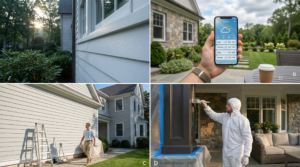
Quick checklist
-
Forecast: no rain for the next 24–48 hours
-
Surface: dry to the touch; no morning dew present
-
Overnight low: within product spec for two nights
-
Humidity: avoid sustained high humidity when possible
Wilton climate reality: warm, humid summers and cold winters
Wilton typically ranges from about 22°F to 82°F across the year, with winters that are very cold and snowy and summers that are warm, humid, and wet. This matters because exterior paint needs time to form a stable film, and the risk spikes when nights are cold, humidity stays high, or storms reset surfaces with moisture. Use the month-by-month table below as a planning lens—not a guarantee.
Month-by-month planning table for Wilton exteriors
This table translates Wilton’s seasonal pattern into practical scheduling guidance. “Best” doesn’t mean perfect—only that you’re more likely to get stable temps and drier surfaces. Always confirm with the product’s Technical Data Sheet (TDS) and your site’s sun/shade exposure.
Wilton exterior painting windows
|
Period |
Usually best for |
Key risks to watch |
|
Late Apr–May |
Early starts, moderate temps |
Rainy stretches, cool nights, pollen film |
|
Jun |
Steadier warmth |
Humidity spikes, afternoon storms |
|
Jul–Aug |
Long days, reliable heat |
Flash-drying on hot sun sides, high humidity |
|
Sep–early Oct |
Often the most stable |
Shortening days, cooler nights arrive |
|
Late Oct |
Limited touch-ups |
Overnight lows, damp leaves/dew |
|
Nov–Mar |
Avoid full exteriors |
Cold temps, snow/ice, poor cure windows |
Best time of day: avoid dew and avoid peak sun
Two problems ruin otherwise “good” days: morning dew and harsh midday heat. Painting too early can trap moisture; painting on sun-baked siding can cause flash drying (skin forms before proper bonding). A practical approach is to start after surfaces dry and shift elevations based on exposure—shade sides first, then sun sides once surface temps settle. If you’re planning a pro job, the crew should manage elevation sequencing, not just “paint everything today.”
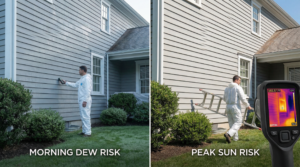
Elevation sequencing
-
Morning: shaded elevations after dew clears
-
Midday: move away from hottest, sun-baked walls
-
Late afternoon: return as surface temps normalize
What Wilton-specific exposures change your schedule
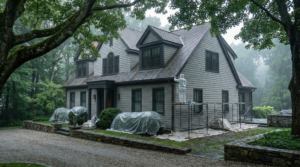
Wilton’s wooded lots and mixed shade patterns can keep certain elevations damp longer, especially on north-facing areas. That changes how fast surfaces dry after rain and how long you should wait before priming and topcoating. If you’ve seen mildew staining or recurring peeling in shade zones, timing and prep must work together: clean thoroughly, let surfaces dry fully, and avoid painting into a window where humidity stays elevated overnight.
How timing affects lifespan
The hidden cost of painting outside the right window is premature failure—peeling at edges, joint cracking, or uneven weathering. That’s why the “cheaper” quote that forces a rushed schedule can become the most expensive outcome. If you’re budgeting, treat weather windows as part of the durability system, alongside surface prep and primer strategy.
Link to lifespan guide
How Long Does Exterior Painting Last
Link to cost guide
FAQs
Can you paint exteriors in early spring in Wilton?
Sometimes, but only in stable windows where overnight lows and dew point conditions stay within product specs.
Is fall better than summer in Connecticut?
Often, yes—early fall can be more stable, but shorter days and colder nights narrow the safe window.
What’s the biggest timing mistake homeowners make?
Scheduling by “month” instead of by dew point, surface dryness, and overnight lows.
How many dry days do we need?
Plan for at least 2–3 stable days for proper application and early curing, depending on scope and product.
Why does shade matter so much?
Shade holds moisture longer, which raises adhesion risk if surfaces aren’t fully dry.
Plan Your Wilton Exterior Around Safe Weather Windows
Juniors Pro Care House Painters plans exterior work around dew point, overnight lows, and cure windows—then matches prep and primer strategy to your home’s exposure. Request a written estimate with a schedule window you can trust. Contact us.