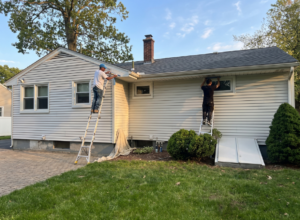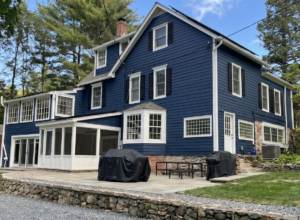
Os proprietários de casas em Weston costumam notar o desgaste primeiro nas bordas dos acabamentos, juntas e fachadas sombreadas — e não nos painéis de revestimento maiores. Isso é normal, mas o descascamento precoce não é. Este artigo explica os prazos realistas para a pintura externa por tipo de superfície, o que reduz a vida útil em propriedades com vegetação e como um sistema de preparação e aplicação correta evita falhas recorrentes nos ciclos sazonais de Connecticut.
A linha de base: como são os ciclos de repintura “normais”.
Muitas referências de proprietários citam um ciclo de repintura de vários anos, mas as condições climáticas de Weston podem reduzir os prazos para detalhes que exigem maior atenção. O objetivo não é atingir um número perfeito, mas sim identificar se sua casa está envelhecendo normalmente ou se apresenta algum problema de aderência/umidade que exija um sistema mais eficiente antes de repintar.
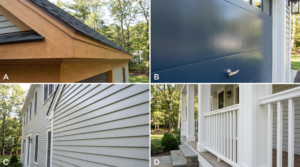
As quatro variáveis que controlam a longevidade
-
Exposição: intensidade solar versus sombra prolongada
-
Padrões de umidade: zonas úmidas repetidas e orvalho.
-
Substrato: molduras/portas versus revestimento amplo
-
Qualidade do sistema: preparação da adesão + primer + janela de cura
Cronograma de desempenho da superfície que os proprietários de imóveis em Weston devem esperar.
Diferentes superfícies se deterioram em velocidades diferentes. Molduras e portas sofrem mais desgaste, têm mais bordas e geralmente ficam em áreas de transição entre água e solo. Use a tabela abaixo para planejar e avaliar os sintomas atuais.
Tabela de planejamento de expectativa de vida
|
Superfície |
Faixa típica |
Por que isso muda? |
|
Acabamento/faixa de madeira |
4 a 8 anos |
Movimento + bordas + exposição à água |
|
Portas / elementos de entrada |
3 a 6 anos |
Manuseio + sol + impacto |
|
Revestimento (bem preparado) |
6 a 12 anos |
Construção e exposição do filme |
|
Grades / persianas |
3 a 7 anos |
UV + movimento + contato |
Se você observar bolhas, descascamento em algumas partes da superfície ou falhas repetidas em um período de algumas temporadas, geralmente não se trata de “intempéries”. É um problema de umidade/aderência. Repintar sem diagnosticar a causa frequentemente resulta na repetição do mesmo padrão de falhas.
Fatores específicos de Weston que reduzem a vida útil da tinta
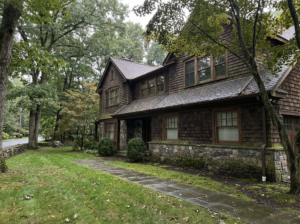
Propriedades arborizadas podem reter certas elevações úmidas por mais tempo, especialmente nas fachadas voltadas para o norte. Isso aumenta a probabilidade de formação de mofo e torna o momento da aplicação do selante mais crítico após a chuva. Além disso, as variações de temperatura tensionam as linhas de selante nas transições de acabamento, onde a água pode infiltrar-se por trás do revestimento se as juntas não estiverem estabilizadas.
Cinco sinais de alerta precoce
-
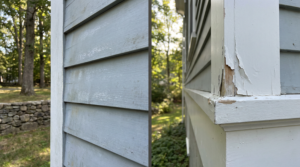
Repita a aplicação de corante antimofo nas mesmas áreas.
-
Fissuras finas nas juntas do selante
-
Resíduo esbranquiçado que se desprende na mão
-
Levantamento das bordas nos cantos do acabamento
-
A descamação concentra-se perto das áreas de respingos de água.
O sistema de durabilidade que impede falhas recorrentes
A durabilidade aumenta quando o tratamento aborda a causa, e não apenas o sintoma. Um sistema resistente estabiliza camadas frágeis, sela as transições de água, prepara a superfície de acordo com o substrato/exposição e programa a aplicação em janelas de cura seguras — especialmente em áreas com muita sombra.
A lista de verificação de durabilidade “peça por isso”
-
Preparação da adesão detalhada (raspar/lixar/alisar suavemente)
-
Reparos e vedação de juntas em transições
-
Plano básico de conscientização sobre exposição (onde e porquê)
-
Sequenciamento de elevação para sombra e sol
-
Um período de tempo que evite noites frias e superfícies úmidas.
Prolongue a vida útil com manutenção adequada.
Muitas vezes, é possível prolongar a vida útil do produto por anos, realizando a manutenção preventiva dos pontos fracos antes que se tornem grandes problemas. O segredo é detectar pequenas falhas precocemente, principalmente em bordas de acabamento e elevações sombreadas.
Cinco medidas de manutenção que ganham tempo
-
Lavagem delicada para remover películas e agentes causadores de mofo.
-
Retoque a superfície exposta antes que a água penetre.
-
Reaplicar selante nas juntas danificadas ao redor das transições.
-
Controle os respingos com calhas e drenagem.
-
Trate pontualmente as manchas recorrentes em áreas sombreadas.
Perguntas frequentes
Por que o acabamento falha antes do revestimento?
O acabamento possui mais arestas e juntas, onde a água e o movimento se concentram.
Será que uma tinta de alta qualidade, por si só, garante uma longa vida útil?
Não — a qualidade da preparação e o tempo de cura geralmente são mais importantes.
O que o descascamento em placas indica?
Normalmente, trata-se de uma falha de adesão; faça o diagnóstico antes de repintar.
A sombra reduz a expectativa de vida?
Sim, porque as superfícies permanecem úmidas por mais tempo e a probabilidade de formação de mofo aumenta.
Qual é a melhoria mais rápida para a próxima repintura?
Um plano de preparação por escrito, além de instruções de uso e planejamento considerando a exposição.
Obtenha um plano de repintura Weston feito para durar.
A Juniors Pro Care House Painters constrói fachadas em Weston priorizando a preparação da superfície para melhor aderência, o controle da umidade e a secagem segura das janelas — para que você não precise repintar antes do necessário. Solicite um orçamento por escrito com foco na durabilidade.